Tariffs, Bonds, and Bitcoin: Why Trump’s Trade War Misstep Boosted Crypto’s Safe-Haven Narrative

Saifedean Ammous Says the Bond Market Crushed Trump’s Tariff Tactics — and Bitcoin Is the Real Winner

As U.S. President Donald Trump’s tariff strategy backfired in the bond market, a growing chorus of analysts and economists is pointing to Bitcoin as a financial refuge amid escalating global uncertainty. One of the loudest voices? Saifedean Ammous, renowned economist and author of The Bitcoin Standard.
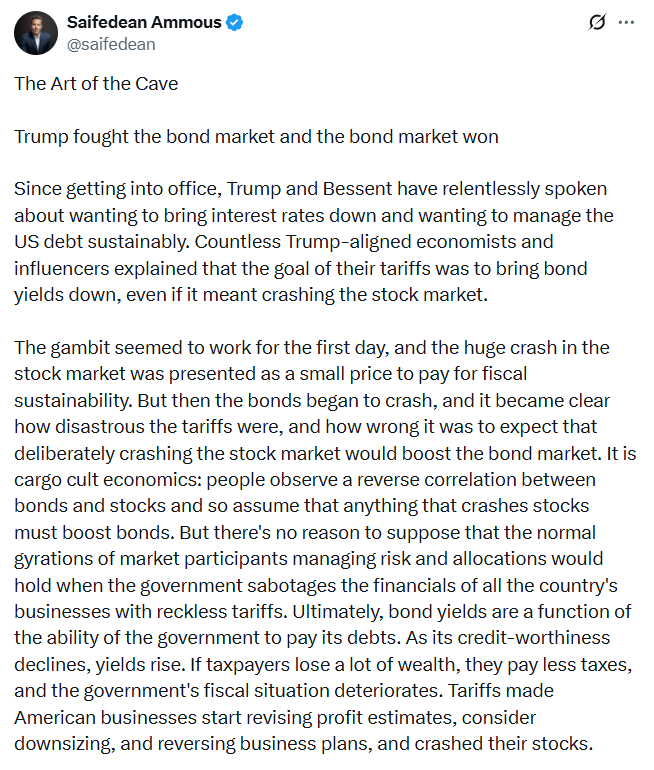
In a blunt critique following Trump’s reversal on heightened tariffs, Ammous declared: “Trump fought the bond market and the bond market won.” His remarks, delivered via X (formerly Twitter) on April 23, highlight how Trump’s economic gamble — aimed at securing fiscal sustainability — ended up igniting fresh instability in U.S. Treasury yields and stock markets alike.
Tariff Rollbacks Spark Bond Turmoil, Market Confusion
Trump’s sudden reversal of tariff hikes, just hours after implementation, sent shockwaves through financial markets. His administration dialed back to a 10% baseline tariff for most nations (excluding China), a move Ammous says was driven by the unexpected spike in Treasury yields.
“The bonds began to crash, and it became clear how disastrous the tariffs were,” Ammous said. “It was wrong to expect that crashing the stock market would boost the bond market.”
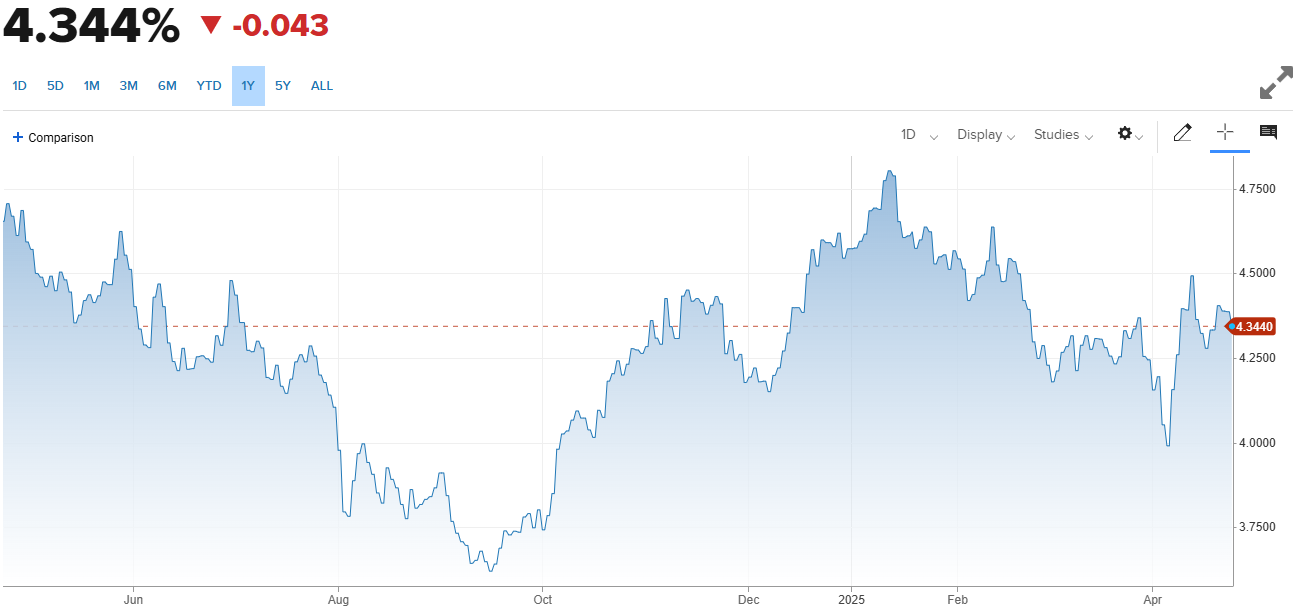
According to CNBC data, the 10-year U.S. Treasury yield jumped from under 4% to 4.5%, prompting a wave of concern about inflation, recession, and the broader economic trajectory.
Bitcoin Rises as Confidence in Bonds Falters
Amid the turmoil, analysts have noted an emerging pattern: Bitcoin is acting more like a hedge and less like a speculative tech asset.
“Bitcoin is behaving like a hedge against economic uncertainty,” said Iliya Kalchev, an analyst with Nexo Dispatch, noting its resilience following Trump’s suggestion of reduced tariffs on Chinese goods.
Even Global Macro Investor founder Raoul Pal hinted that the entire episode might simply be posturing for future U.S.-China trade talks — though Ammous was less charitable, saying: “Trump couldn’t keep tariffs in place for two days, while China showed no interest in negotiating.”
Bitcoin Standard Revisited: A Radical Monetary Proposal
The tariff turmoil has revived longstanding proposals for a Bitcoin-backed dollar — a controversial idea championed by Ammous.
“The U.S. should buy Bitcoin until it can fully back the dollar supply,” he said. “Then, move to a Bitcoin standard where dollars are redeemable for BTC, and government spending never exceeds revenue.”
This proposal harkens back to the gold-backed dollar system used before 1971. Under that system, the U.S. dollar was tied to a tangible commodity — gold — until President Richard Nixon ended gold convertibility to protect reserves.
Now, Ammous and others see Bitcoin’s fixed supply and decentralized nature as an even stronger alternative to gold, especially in a world plagued by political instability and fiscal overreach.
Bitcoin’s Gold Rivalry Gains Ground
Experts like Joe Burnett, director of market research at Unchained, believe Bitcoin could eventually rival or surpass gold’s market cap — predicting a Bitcoin price of $1.8 million by 2035.
If that future becomes reality, then today’s bond market turmoil may one day be seen as a pivotal moment in Bitcoin’s evolution from speculative asset to sovereign-grade store of value.
Share This


