Arizona Governor Vetoes Key Crypto Bills but Approves Strict Bitcoin ATM Regulations

Governor Katie Hobbs Takes a Cautious Approach to Cryptocurrency Legislation
In a significant move for the state’s digital asset landscape, Arizona Governor Katie Hobbs has vetoed two major bills that would have expanded the state’s engagement with cryptocurrencies, while simultaneously approving a strict regulatory framework for Bitcoin ATMs.

On May 12, Hobbs rejected Senate Bill 1373, which aimed to establish a Digital Assets Strategic Reserve Fund. This fund would have allowed the state to hold crypto assets obtained through seizures or legislative allocations. Hobbs expressed concern over the volatility of cryptocurrency markets, stating that the “current volatility” made such a fund a poor fit for general state funds.
“I have already signed legislation this session which allows the state to utilize cryptocurrency without placing general fund dollars at risk,” Hobbs explained in her veto letter.
This move follows her veto on May 3 of Senate Bill 1025, also known as the “Arizona Strategic Bitcoin Reserve Act”. This bill would have authorized the state to invest up to 10% of its treasury and retirement funds in Bitcoin and other digital assets. According to bitcoinlaws.io, 26 U.S. states have introduced similar bills, with 18 currently active.
Governor Hobbs Rejects Crypto Payments Bill
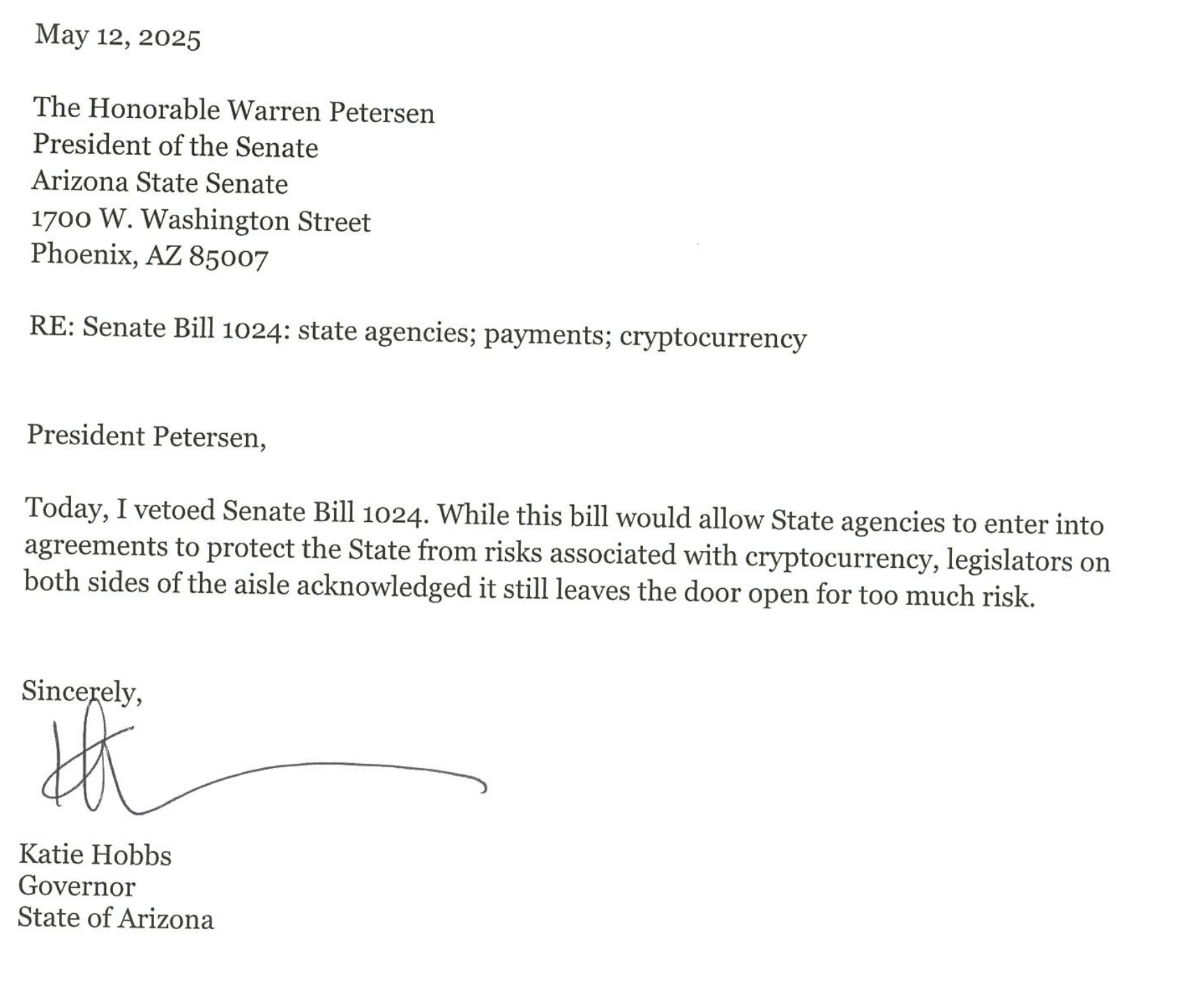
Governor Hobbs also vetoed Senate Bill 1024, which sought to allow state agencies to accept crypto payments for taxes, fines, and fees via approved service providers. Although the bill aimed to shield the state from direct exposure to crypto price volatility, Hobbs argued that it still posed too much risk.
“It still introduced too much risk,” Hobbs stated in her veto decision.
Bitcoin ATM Regulations: A Step Towards Consumer Protection
While Hobbs has taken a cautious stance on broader cryptocurrency initiatives, she signed House Bill 2387 on May 12, which introduces new consumer protection measures for cryptocurrency kiosks (ATMs). The bill aims to reduce fraud and enhance transparency in crypto transactions.
The key elements of the bill include:
-
Clear, multilingual warnings on common crypto scams, with users required to acknowledge these risks before completing transactions.
-
Detailed transaction receipts for all users, including transaction data, fees, and refund policies.
-
Transaction limits: New customers can only use up to $2,000 per day, and returning customers can access up to $10,500 after 10 days.
-
24/7 customer service: Kiosk providers are required to offer a toll-free customer service number.
-
Refund policy: If a new user is tricked into sending crypto due to fraud, they are entitled to a full refund if reported within 30 days.
Currently, Arizona hosts 20 active Bitcoin ATMs, according to CoinATMRadar.
A Balanced Approach to Digital Assets
While Hobbs has vetoed several high-risk crypto bills, she is not entirely turning her back on digital assets. On May 10, she signed House Bill 2749, which updates Arizona’s unclaimed property laws to include digital assets. This allows the state to retain unclaimed cryptocurrencies in their original form, rather than converting them to fiat currency.
These cautious yet forward-thinking measures suggest that Arizona is trying to strike a balance between embracing digital innovation and safeguarding the state’s financial interests.
Share This


