Global Finance Eyes Blockchain as Real-World Asset Tokenization Crosses $3B Milestone

BlackRock, MultiBank, and Libre Fuel the Largest Wave Yet of Institutional Blockchain Adoption
Tokenization is no longer a futuristic idea—it’s becoming reality. This week, a cascade of billion-dollar commitments from major financial players signaled that real-world asset (RWA) tokenization has entered a new phase. The concept of digitizing tangible assets on blockchain platforms, once a fringe theory, is now being implemented at scale by institutions like BlackRock, MultiBank Group, and Libre.
BlackRock Pioneers with $150B Blockchain-Backed Treasury Fund
On April 30, BlackRock filed to launch a digital ledger technology (DLT) share class for its $150 billion Treasury Trust Fund (TTTXX). In practice, this means the world’s largest asset manager is adding blockchain to its operations—not just for novelty, but as an infrastructure tool to mirror and verify investor holdings.
The DLT version of the fund will be available exclusively through BlackRock Advisors and BNY Mellon, offering a tamper-resistant, transparent layer for tracking share ownership. It’s a signal that mainstream financial institutions now view blockchain as a viable and scalable back-end technology.
Libre Tokenizes $500M in Telegram Debt
Also on April 30, Libre, a digital asset platform, revealed it would tokenize $500 million in Telegram-linked bonds. The initiative, dubbed the Telegram Bond Fund, is restricted to accredited investors and will allow the bonds to be used as onchain collateral—unlocking lending and liquidity services directly via blockchain.
MultiBank Signs Record $3B Deal in UAE
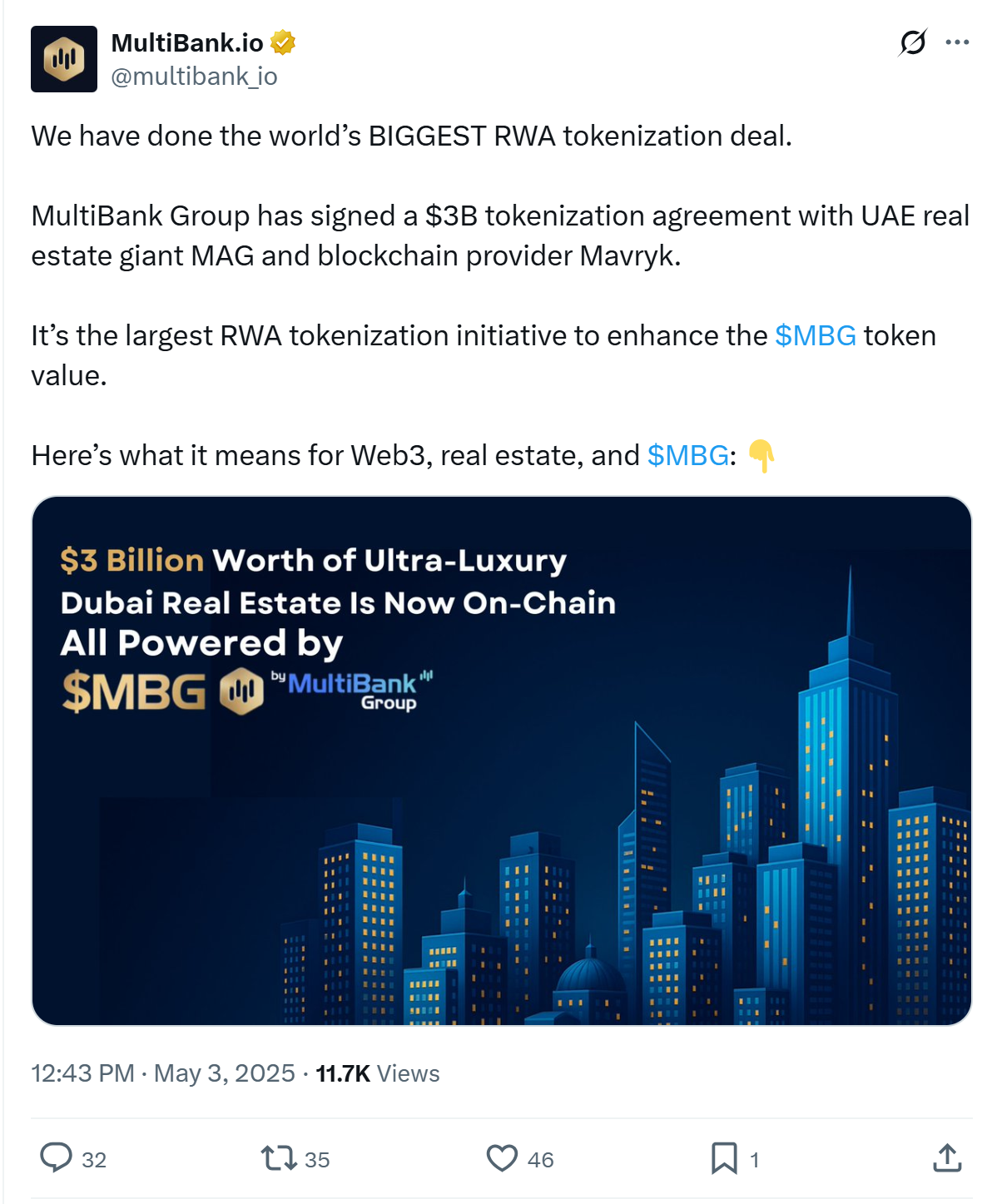
In a potentially industry-defining move, MultiBank Group finalized a $3 billion RWA tokenization agreement with Dubai-based MAG Real Estate and blockchain provider Mavryk. The deal, announced this week, marks the largest RWA tokenization initiative to date, transforming property assets into blockchain-tradable instruments.
Eric Piscini, CEO of Hashgraph, told Cointelegraph, “Everything’s lining up—stronger tech, clearer regulation, and major institutions moving from concept to implementation.”
Why Now? Regulation, Technology, and Trump
Regulatory Winds Shift Under Trump
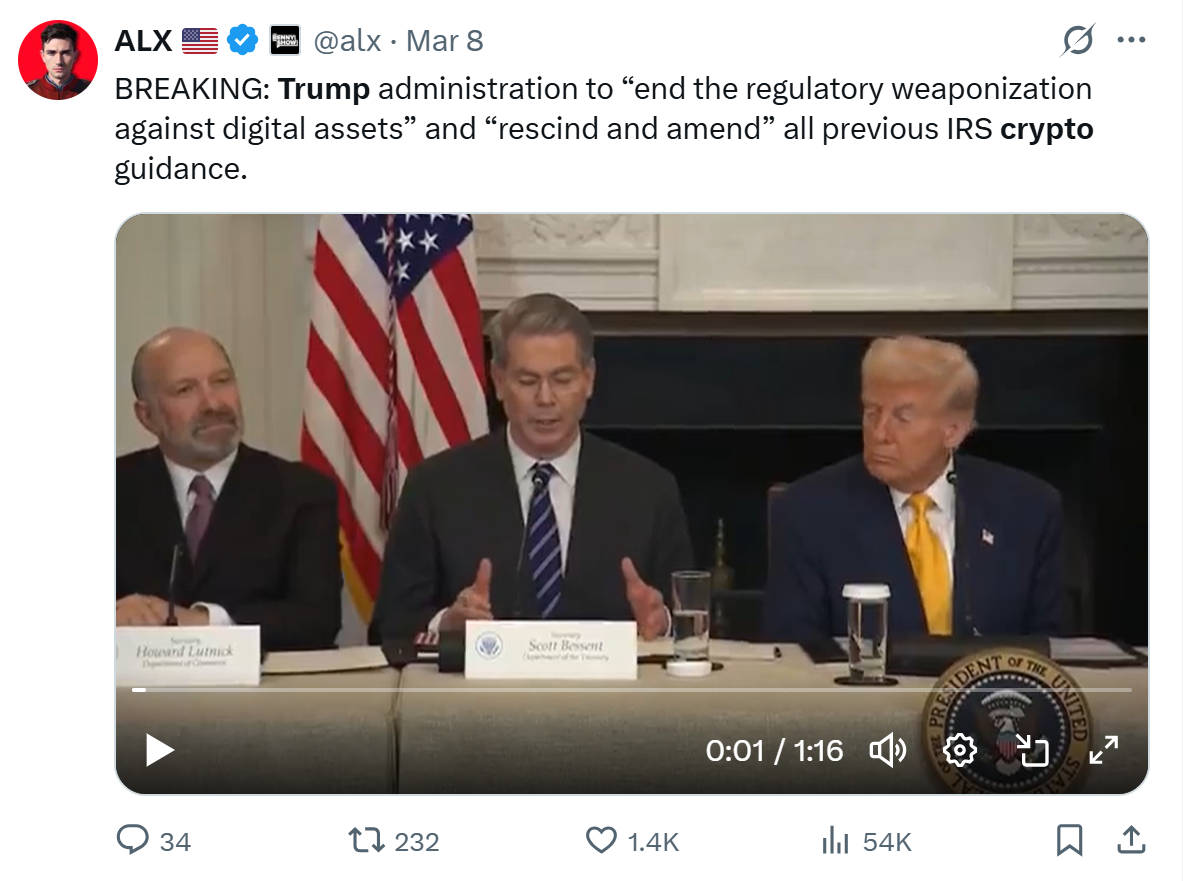
Experts attribute the sudden surge in institutional engagement to a confluence of factors. A major one: U.S. regulatory clarity, largely catalyzed by President Donald Trump’s pro-crypto stance.
Trump’s administration has pressed the SEC and DOJ to back off aggressive enforcement. In just weeks since his election victory, the SEC has paused or dropped more than a dozen cases against crypto firms. The DOJ, meanwhile, has dissolved its crypto enforcement unit, signaling a dramatic softening in policy.

Advancements in Wallets and Blockchain Infrastructure
Felipe D’Onofrio, CTO of Brickken, emphasized that new wallet technology and improved user interfaces are removing key barriers to adoption. Simultaneously, macroeconomic pressure is pushing institutions to seek out efficiency in illiquid markets, giving tokenization additional appeal.
Ethereum Leads, but New Chains Are Emerging
Ethereum remains the dominant platform for RWA tokenization, hosting over $4.9 billion of the $6.5 billion in tokenized U.S. Treasurys, according to RWA.xyz.
Yet competitors are gaining ground. Purpose-built ecosystems like Canton Network, Plume, and Ondo Chain are attracting attention by focusing on compliant asset tokenization from the ground up.
Herwig Koningson, CEO of Security Token Market, emphasized that success doesn’t hinge on Ethereum alone: “Firms like BlackRock are using multiple blockchains, public and private. It’s about the use case—not the chain.”
$10 Trillion Tokenization Market by 2030?
While the excitement is real, challenges remain. Interoperability, regulatory fragmentation, and institutional risk aversion are still major headwinds. But projections are staggering.
-
Piscini estimates that 10% of global financial assets could be tokenized by 2030.
-
D’Onofrio sets the figure at 5–10%.
-
Kazmierczak predicts a 30% transformation of the global financial system.
-
Research from Tren Finance suggests the sector could hit $10 trillion, up from just $185 billion today—a 50x expansion.


